H.R. 8464 & Automated Suspicion: Weaponizing AI Against Digital Redlining
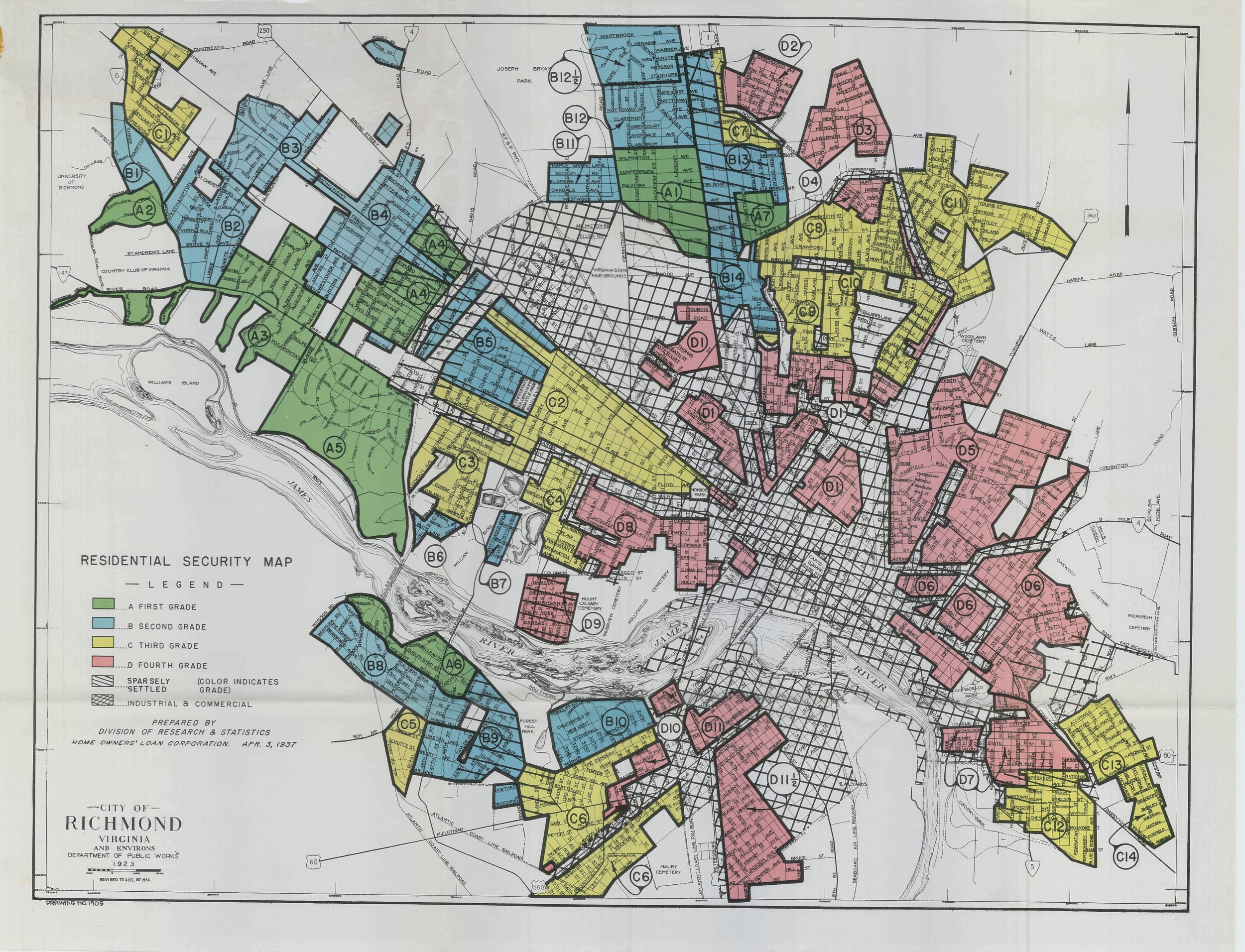
The tools of extraction have evolved. In the 1930s, the government used paper maps and red ink to starve communities of capital. Today, they use predictive algorithms.
For generations, the people at the top have used the exact same playbook. They have controlled, won, taken, and extracted from every great creator and independent community using the same mechanisms: fear, control tactics, and power dynamics. When the system wants to starve an independent movement, it doesn't usually do it with violence; it does it with bureaucracy.
When we talk about these systems at The Vanguard, we refuse to ask you to just take our word for it. Let's look at the verifiable history so you know exactly what game we are playing, and exactly how the board is currently shifting.
In the 1930s, the United States government created the Home Owners' Loan Corporation (HOLC). They literally took maps of cities across America—from Richmond to Chicago to Los Angeles—and drew red lines around Black, immigrant, and low-income neighborhoods. They implemented a grading system. If you lived inside a redlined area (a "D-Grade" zone), you were labeled "hazardous." Banks refused to give you a mortgage, regardless of your personal income or class. They deliberately starved those communities of capital.
That was physical redlining. When gentrification eventually hit those same starved areas decades later, developers moved in to buy up the block for pennies. But our people fought back. We created Community Land Trusts (CLTs)—non-profits that bought the physical dirt and held it in a permanent trust so corporate developers couldn't price families out. We learned how to own the land to survive the map.
But the board has shifted. The government isn’t using paper maps anymore. They are using algorithms.
Right now, lawmakers are quietly pushing forward aggressive legislation, most notably the Stopping Fraudulent Payments Act (H.R. 8464), introduced by the House Oversight Committee. The politicians are selling this to the public under the guise of "fiscal sanity" and taxpayer protection. Their primary justification? The massive fraud scandals of the post-pandemic era, specifically the "Feeding Our Future" case in Minnesota, where federal child nutrition funds were allegedly drained of over $250 million by criminal shell companies.
While the government claims they are just hunting criminals, they are using that crisis as a Trojan horse to change how financial survival works for the rest of us. We are officially moving from a system of human auditors to a permanent era of Automated Suspicion.

The new digital kill-switch.
The Digital Kill-Switch: How H.R. 8464 Works
Historically, the federal government and state social services operated on a "pay and chase" model. If you were an independent provider, a community organizer, or running a grassroots operation, you received the grant funding to do the work in your community. If the government suspected an issue later on, a human being audited your file, asked for receipts, and chased down the discrepancies. It was a flawed system, but it gave independent operators the benefit of the doubt and a chance to explain their human work.
H.R. 8464 destroys that model. The legislation mandates the aggressive expansion of the U.S. Treasury’s "Do Not Pay" (DNP) system, a massive data analytics portal. The goal is to use predictive AI and machine learning to scan every single grant, tax document, and payment request before the money ever leaves the Treasury's vault.
This is where digital redlining begins.
If your independent agency operates in a marginalized zip code, or if your administrative paperwork doesn't match the pristine, data-perfect formatting of a massive corporate non-profit, the Treasury's predictive AI flags you as an "elevated risk." Under H.R. 8464, agencies are empowered to return payment requests immediately if the algorithm doesn't like your data profile.
Your funding is frozen instantly. There is no human review. There is no grace period to fix a typo. It is just a digital kill-switch triggered by a machine that doesn't understand the work you do.
"They know we operate with empathy. They know our primary goal is taking care of the people who actually need it. So they use our humanity against us as an administrative vulnerability. We have been getting in our own way for too long."

The new auditor. H.R. 8464 empowers the Treasury's Do Not Pay system to use machine learning to freeze funds before a human ever reviews your work.
Outgunned But Armed: The Defense Strategy
To those in our community who are worried about the rapid rise of Artificial Intelligence, to the people who are leery, fearful, or exhausted by this technology—we hear you. We understand the hesitation entirely.
But what is the alternative? What do we do when we are outgunned, but we suddenly have access to the exact same weapons? We don't just lay down and let our infrastructure die. We cannot sit back and let things happen to us. At some point, you have to take the power and the control back into your own hands.
If the government and corporate oligarchs are going to build a system designed to take advantage of you, and you don't get a say in how it's built, then you must use whatever tools they have to protect yourself. We cannot get around this technological shift. We cannot un-invent AI. So we might as well weaponize it to benefit our survival.
The Empathy Exploit
The people running these massive corporate and federal structures know who we are. They know we are more human. They know we lead with empathy. Because grassroots creators and independent providers are focused on the actual human work—feeding people, housing people, broadcasting the truth, running real community services—we often let the administrative and structural side slip. We care significantly more about the person sitting in front of us than the formatting of the spreadsheet we have to submit to the state.
The system knows this. They use "efficiency" and "data hygiene" as their new gatekeepers to keep us locked out of the resources we deserve. They are playing our own nature against us.
We have been getting in our own way for too long. We have to stop letting our empathy become a liability on paper.

The Pre-Audit Shield. Let the machine format the paperwork so you can focus on the human work.
Building the Pre-Audit Shield
Just like our predecessors built Community Land Trusts to fight physical redlining, we have to build a digital shield to fight automated suspicion. If the gatekeeper is an algorithm, you need an algorithm to translate your work into the exact language that the gatekeeper respects.
Here is The Vanguard's framework to protect your independent infrastructure:
The Pre-Audit: Before you submit a grant, a business application, or a tax document, run it through your own AI systems. Prompt the AI to act as a federal auditor. Cross-reference your documents against federal compliance codes. Use your AI to find the red flags before the government's DNP system ever gets a chance to flag you.
Formatting for the Machine: You do the human work in the physical world; let the AI do the corporate formatting in the digital world. Use these tools to ensure your independent, grassroots operation looks mathematically identical on paper to a massive corporate entity. Give the algorithm zero excuse to reject your profile.
Removing Human Error: Clerical errors happen when you are running the entire operation solo. But to a predictive AI, a clerical error isn't a mistake—it is a "fraud risk indicator." Automate your administrative pipelines to strip out the simple human mistakes that trigger their kill-switches.
They are using AI to build a massive, invisible wall around the resources. We are going to use AI to build a door right through it. The rules of the game have changed entirely, but the mission remains exactly the same. Secure your infrastructure, educate yourself on the history, weaponize the tools available to you, and never lay down.
Written By: Storii Online Magazine
Image & Media Credits:
Header Image (1937 Richmond HOLC Redline Map): * Credit: Image courtesy of Mapping Inequality: Redlining in New Deal America, a project by the University of Richmond’s Digital Scholarship Lab.
Source URL: https://dsl.richmond.edu/panorama/redlining/map/VA/Richmond/context
Sidebar Image (Modern Data Center): * Credit: Public Domain image via Wikimedia Commons.
Source URL: https://upload.wikimedia.org/wikipedia/commons/d/db/Modern_Data_Center.jpg
Inline AI Assets (The "FREEZE" Button & The Digital Shield): * Credit: Original generative artwork created for The Vanguard.
Source Material:
The History of Physical Redlining: * Citation: Robert K. Nelson, LaDale Winling, Richard Marciano, Nathan Connolly, et al., "Mapping Inequality," American Panorama, ed. Robert K. Nelson and Edward L. Ayers.
The Legislation (H.R. 8464): * Citation: House Committee on Oversight and Accountability, summary and introduction of the Stopping Fraudulent Payments Act.
The Federal Algorithm Infrastructure: * Citation: The U.S. Department of the Treasury's Do Not Pay (DNP) program portal.
Link:Treasury DNP Portal
The Catalyst Case (Minnesota Fraud): * Citation: U.S. Department of Justice public reporting and case files regarding the $250 million Feeding Our Future child nutrition program fraud.
Link:Case Overview
Video Context / On-the-Ground Reporting: * Citation: News coverage of the fallout from the Minnesota social services fraud investigations.